Planning guide
The Costa Brava with children
The Costa Brava is the northernmost stretch of Spain's Mediterranean coast, and well within driving distance for families from Belgium and the Netherlands. But what kind of holiday is it, really? Here's an honest overview to help you picture your summer.
What kind of holiday is it?
The Costa Brava — literally the ‘rugged coast’ — runs for roughly 200 km from the French border down to Blanes, in the province of Girona in Catalonia. It takes its name from the stretches where pine-covered rocks drop steeply into the sea, but it's more varied than that: long sandy beaches, small coves, busy resorts, quiet medieval villages and, just inland, green rolling countryside.
For families, that means variety: a beach day, an afternoon at the pool, a town with an ice cream at the end of it, and the occasional day out. Distances are modest, so a day trip doesn't have to take up the whole day.
Sandy beach or rocky cove?
The biggest choice on the Costa Brava is what kind of beach you want. Broadly speaking, there are two kinds.
- Long sandy beaches. Mostly in the north, around the Bay of Roses, and in the larger resorts further south. Wide sand, room to dig and run, and water that usually deepens gradually. The easiest choice with toddlers and young children.
- Coves (calas). Small bays tucked between the rocks, especially along the middle stretch of the coast. Clear water that's great for snorkelling with older children, but often coarse sand or pebbles, sometimes steps down, and little space or parking in high season.
Tip: Pack water shoes. On pebbles and rocks they're worth their weight in gold for small feet.
On lifeguarded beaches, look for the flag: green means it's safe to swim, yellow means take care, red means no swimming. In the north, the tramuntana can blow too — a strong northerly wind that sometimes lasts a day or more. On days like that, a sheltered cove or the pool is more fun than an exposed beach.
Towns and day trips worth the drive
- Girona. A compact city with a beautifully preserved old town. Walk along the old city walls, climb the steps up to the cathedral and look at the colourful houses lining the River Onyar. Ideal for a cooler morning, with plenty of places to stop for lunch.
- Tossa de Mar. A seaside town whose medieval walled old town, the Vila Vella, sits on a headland above the beach. Children love the towers and walls; combine it with a swim in the bay below.
- Roses and Empuriabrava. Roses has a long beach along its seafront, on a wide bay. Next door, Empuriabrava is built around a network of canals that you can explore on a boat trip.
- Aiguamolls de l'Empordà. A wetland nature park between Roses and L'Escala. Flat footpaths lead to bird-watching hides, and with a bit of luck you'll spot storks. An easy outing with young children — bring insect repellent in summer.
- Empúries. Near L'Escala lie the remains of an ancient Greek and Roman town, right by the sea. More gripping for school-age children than it sounds, and the beach is right next to it.
Where you stay decides which of these are easy trips, so get a map out before you plan every outing.
When is it hottest?
July and August are the hottest months, and the busiest. Days are long and hot, the sea is at its warmest towards the end of summer, and in August many Spanish families are on holiday too. That's when beaches and popular towns are at their fullest.
June and the first half of September are often a good compromise: warm enough for the beach, noticeably calmer, and less fierce in the afternoons. If your children aren't at school yet, those weeks are well worth considering.
Spring is milder. In April and May the days can be pleasantly warm, but the sea is still cool and the evenings turn chilly — lovely for exploring, less so for long swims.
Tip: In high summer, plan around the midday heat: the beach or a day trip in the morning, shade, the pool or a nap in the early afternoon, and back out once it cools down.
Practical tips with children
- Take the sun seriously. Hats, high-factor sun cream and UV swimwear for young children. The Mediterranean sun is stronger than a sunny day at home.
- Go with the Spanish rhythm. Spain eats late, and the towns come alive in the evening. Many families find that a longer afternoon rest makes an evening stroll and a late ice cream far easier.
- Afternoon closing. In smaller towns, some shops close for a few hours in the afternoon. Do your shopping in the morning where you can.
- European Health Insurance Card. Bring an EHIC for every member of the family, and check what your travel insurance covers. For minor ailments, a pharmacy — look for the green cross — is a good first stop.
- A little Spanish or Catalan. Catalan is spoken here alongside Spanish. A ‘hola’, ‘gràcies’ or ‘gracias’ goes a long way, and children often pick it up fastest.
Choosing your base
Many families pick one base and explore from there. A few questions help you choose:
- Do you want a sandy beach within walking distance, or are you happy to drive to coves?
- Is a pool close by important for the hottest hours?
- Are your children after activities and friends to play with, or peace and quiet?
- How much do you want to cook yourselves, and how often will you eat out?
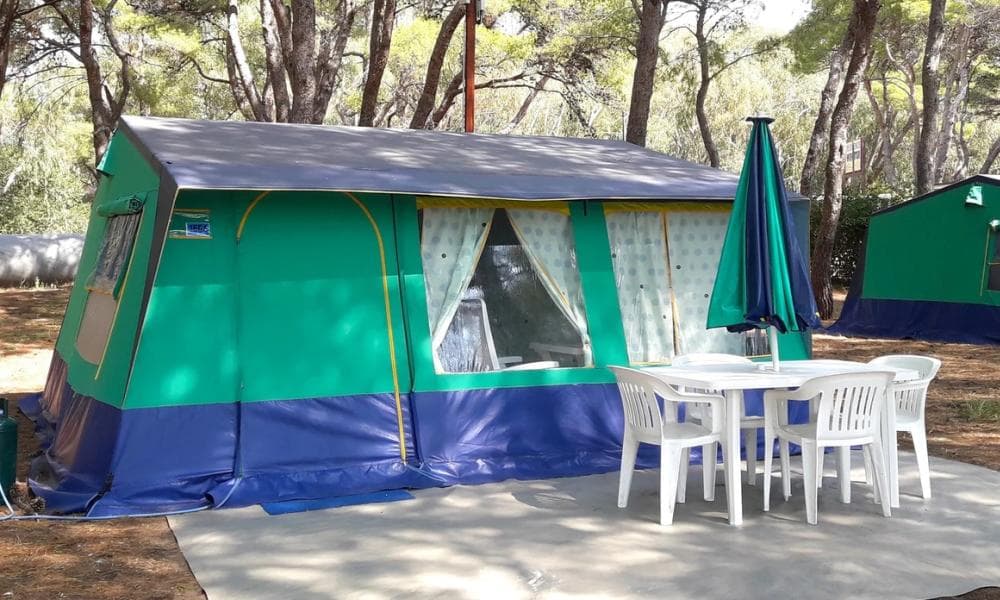
If a campsite fits that picture, a bungalow tent is a way to stay without hauling your own gear. Our tents stand on three campsites with the beach within walking distance and, in high season, a children's activity programme: two in Lloret de Mar and one on the beach at Platja d’Aro.